Paper vs Plastic Egg Trays: Which Is the Right Choice for Your Poultry Farm in 2026?
Every poultry farm, egg distributor, and packaging buyer in India faces the same decision at some point — should you use paper egg trays or plastic egg trays? While both options exist in the market, they are fundamentally different in terms of material, environmental impact, cost, performance, and regulatory compliance. With India's packaging regulations tightening significantly in 2025–2026 and the global shift toward sustainable packaging accelerating, understanding this difference is no longer just a business preference — it is a strategic necessity.
At Sri Vijaya Durga Paper Board Industry, Palwancha, Telangana, we have been manufacturing premium-grade paper egg trays for poultry farms, bulk distributors, and export clients across India and international markets. In this comprehensive guide, we break down every key difference between paper and plastic egg trays so you can make the most informed packaging decision for your farm or business.
What Are Paper Egg Trays?
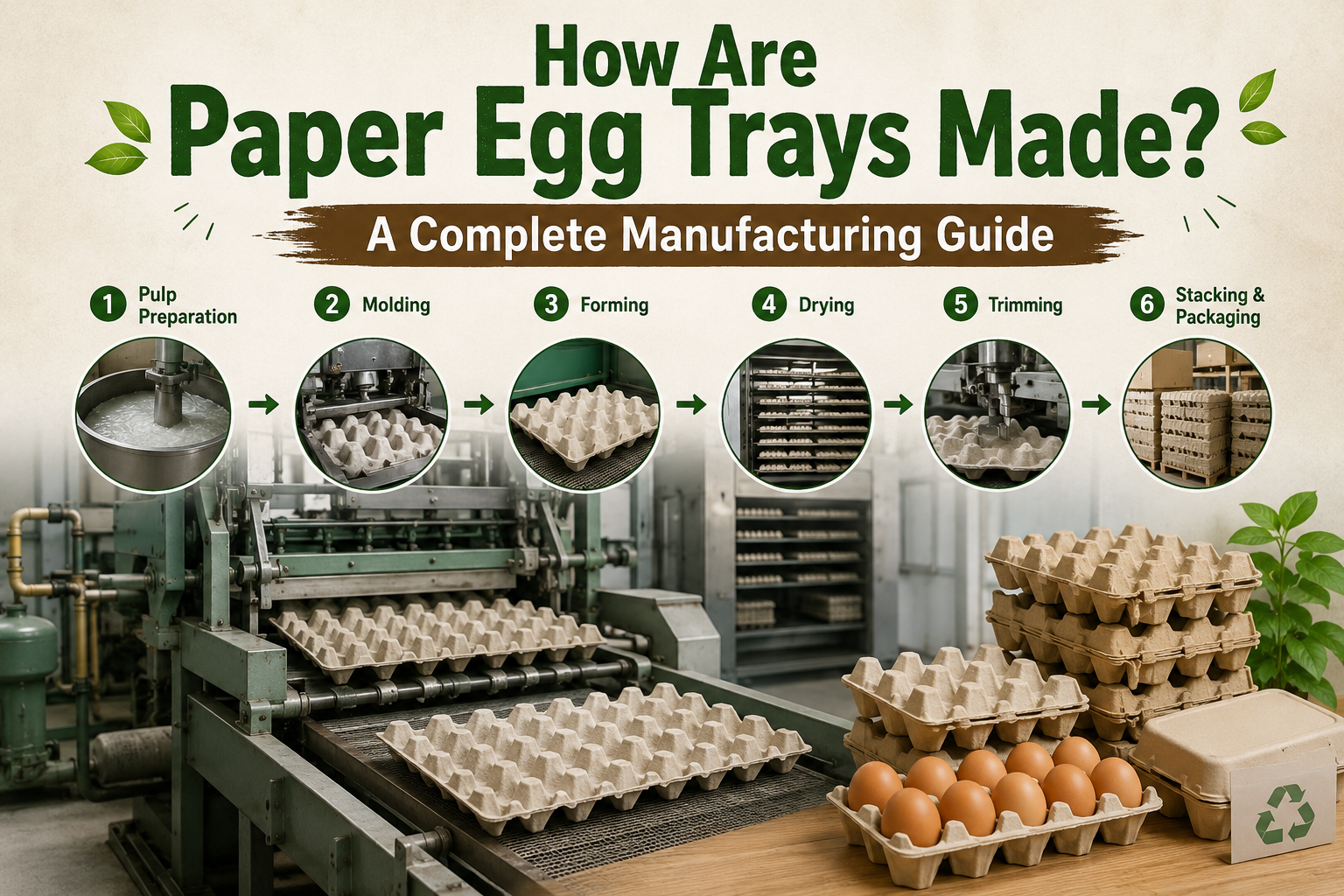
Paper egg trays — also called molded pulp trays or molded fiber trays — are manufactured from recycled waste paper such as old newspapers, corrugated cardboard, and used paper scraps. The raw material is mixed with water, pulped into a smooth fiber slurry, vacuum-formed into egg-shaped mold cavities, pressed, and then dried — either naturally under sunlight or through industrial tunnel dryers.
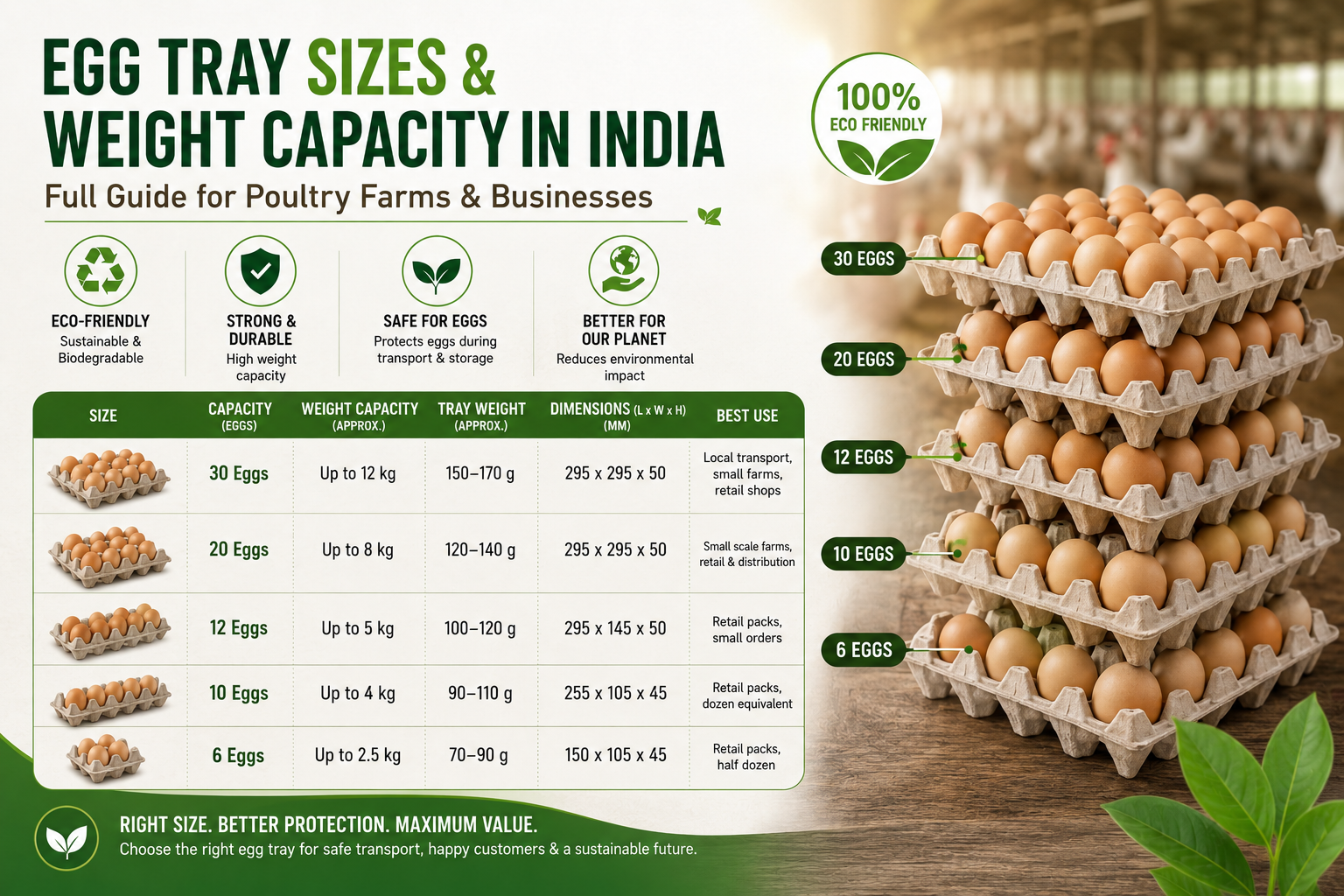
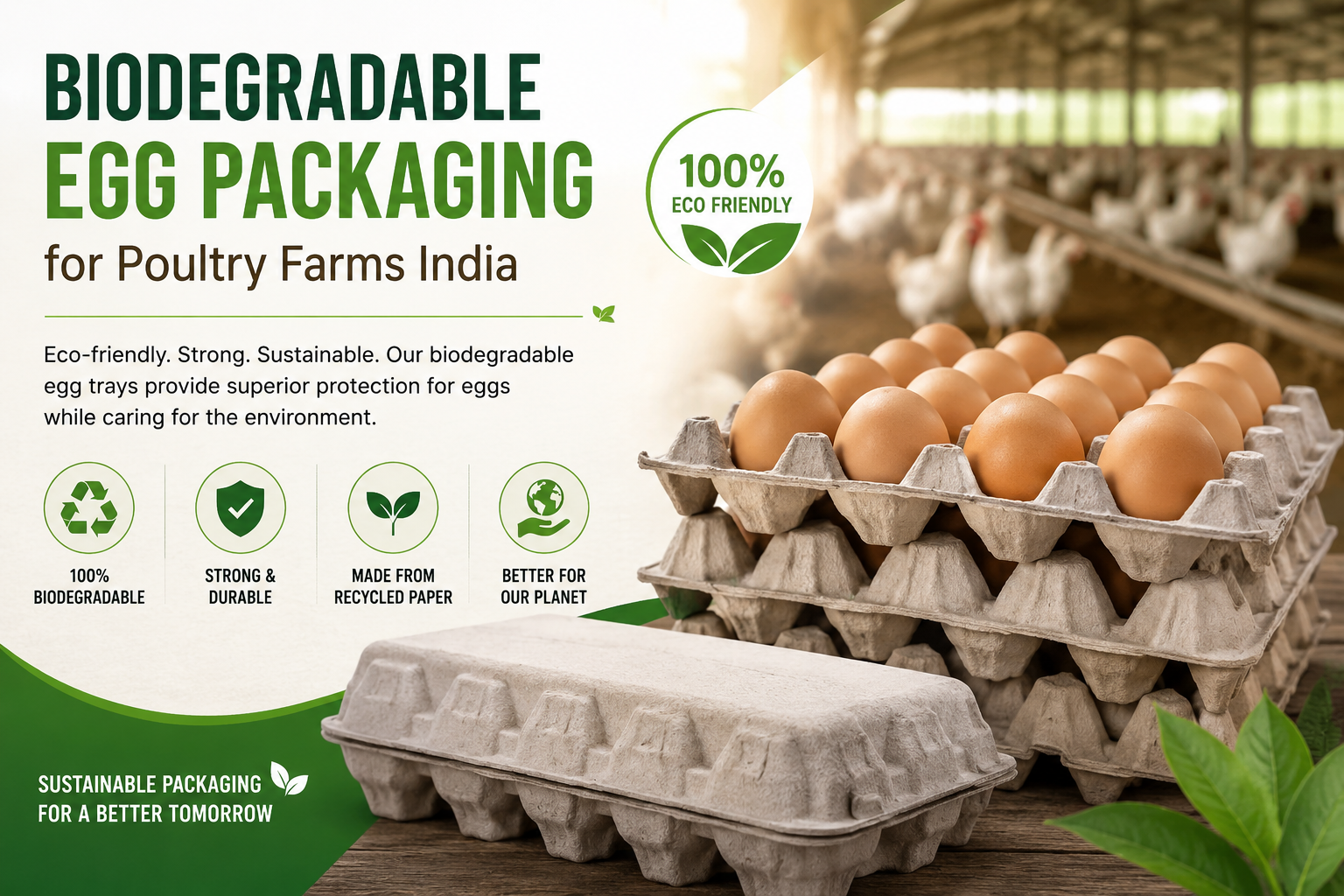
The result is a fully biodegradable, lightweight, shock-absorbing tray that cradles each egg in its own individual cavity. In India, the standard paper egg tray holds 30 eggs and is the dominant packaging format used by poultry farms, wholesalers, hatcheries, and exporters. At Sri Vijaya Durga, our paper egg trays are produced using premium pulp sourced from ITC Bhadrachalam — ensuring consistent fiber quality and superior structural performance in every batch.
What Are Plastic Egg Trays?
Plastic egg trays are manufactured from petroleum-based polymers — primarily PVC, PET, or polypropylene — through injection molding or vacuum forming processes. They are harder, smoother, and more rigid than paper trays, and can be washed and reused multiple times before disposal. Plastic trays are often used in controlled environments such as hatcheries and cold storage facilities where repeated cleaning is essential.
However, plastic egg trays are non-biodegradable, derived from non-renewable fossil fuel resources, and increasingly subject to regulatory restrictions under India's evolving plastic waste management framework.
Key Differences Between Paper and Plastic Egg Trays
1. Raw Material and Manufacturing
Paper egg trays are made from 100% recycled waste paper — a renewable, abundantly available raw material that diverts thousands of tonnes of paper waste from landfills every year. The manufacturing process consumes significantly less energy compared to plastic tray production and generates no toxic by-products.
Plastic egg trays, by contrast, are derived from non-renewable petroleum-based chemicals. Their production involves energy-intensive polymer processing and releases greenhouse gases, contributing to a significantly higher carbon footprint per unit of packaging.
2. Biodegradability and Environmental Impact
This is where the difference between paper and plastic egg trays is most stark. Paper egg trays decompose naturally within a few weeks under normal environmental conditions and can be composted or recycled at the end of their useful life. Farms can even use old paper trays as compost material or mulch, completing a fully circular resource loop.
Plastic egg trays, on the other hand, take between 400 and 500 years to decompose. Even when recycled, the process is energy-intensive and often results in downcycled materials that eventually end up in landfills. The long-term environmental burden of plastic trays on India's soil, water, and wildlife is well documented and increasingly regulated by the government.
3. Egg Protection and Shock Absorption
Paper egg trays have a natural advantage in egg protection due to the inherent cushioning properties of molded pulp fiber. Each cup-shaped cavity absorbs vibration and mechanical shock during transportation, significantly reducing the risk of cracking or breakage — even on rough roads and long-distance supply routes. The breathable structure of paper trays also promotes air circulation around each egg, helping maintain freshness during storage and transit.
Plastic trays, while rigid and structurally uniform, provide moderate shock absorption. Their hard, smooth surface does not absorb vibrations as effectively as molded pulp. In rough transport conditions — common across India's road network — plastic trays may allow eggs to jostle more than paper alternatives, particularly when stacked without adequate padding.
4. Cost and Bulk Economics
For poultry farms and distributors buying packaging in bulk, cost per tray is a critical factor. Paper egg trays are consistently more cost-effective than plastic trays, especially at high volumes. The raw material — recycled waste paper — is widely available and inexpensive across India. Manufacturing costs are lower, and there are no EPR compliance overheads, recycling fees, or traceability investment requirements.
Plastic trays carry a higher base manufacturing cost due to the price of petroleum-derived polymers. Additionally, under India's 2025–2026 Plastic Waste Management Rules, businesses using plastic packaging must register on the CPCB EPR portal, meet mandatory recycled content targets (minimum 30% for rigid plastic packaging from 2025–26, rising to 60% by 2028–29), and face penalties of up to ₹15 lakh for non-compliance. These hidden compliance costs make plastic trays significantly more expensive than they appear.
5. Regulatory Compliance in India
India's regulatory environment in 2026 strongly favors paper-based, biodegradable packaging. The Plastic Waste Management (Amendment) Rules, 2025, effective from July 1, 2025, introduced mandatory QR/barcode traceability on plastic packaging, EPR registration obligations, and escalating recycled content mandates. From April 1, 2026, food-grade plastic packaging must use a minimum of 40% recycled content — a threshold that will rise 10 percentage points annually through 2028–29.
Paper egg trays are entirely outside the scope of these regulations. Choosing paper means zero EPR obligations, no compliance registration costs, no recycled content mandates, and no penalty exposure — making it the simplest and most future-proof packaging decision for Indian poultry businesses.
6. Reusability
Plastic trays can be washed and reused multiple times, which is an advantage in closed-loop hatchery environments where trays travel the same route repeatedly and hygiene protocols are strictly controlled. In open supply chains — where trays move from farm to wholesaler to retailer and are rarely returned — this reusability advantage is largely theoretical and does not offset the cost and compliance disadvantages.
Paper egg trays are single-use in most supply chain contexts, but because they are biodegradable and inexpensive to replace, single-use paper trays are far more environmentally and economically responsible than single-use plastic trays.
7. Export Market Acceptance
In international markets including the Gulf countries, Southeast Asia, and European Union nations, biodegradable paper egg packaging is widely preferred and often required by buyers and retail chains with strict sustainability procurement policies. Many global retailers and food distributors have eliminated plastic packaging from their egg supply specifications entirely.
Plastic trays face increasing restrictions in these export markets, reducing their viability for Indian farms and distributors targeting international clients. Sri Vijaya Durga supplies export-grade paper egg trays to markets including Dubai, Mumbai, and Kolkata — formats that consistently meet international buyer specifications.
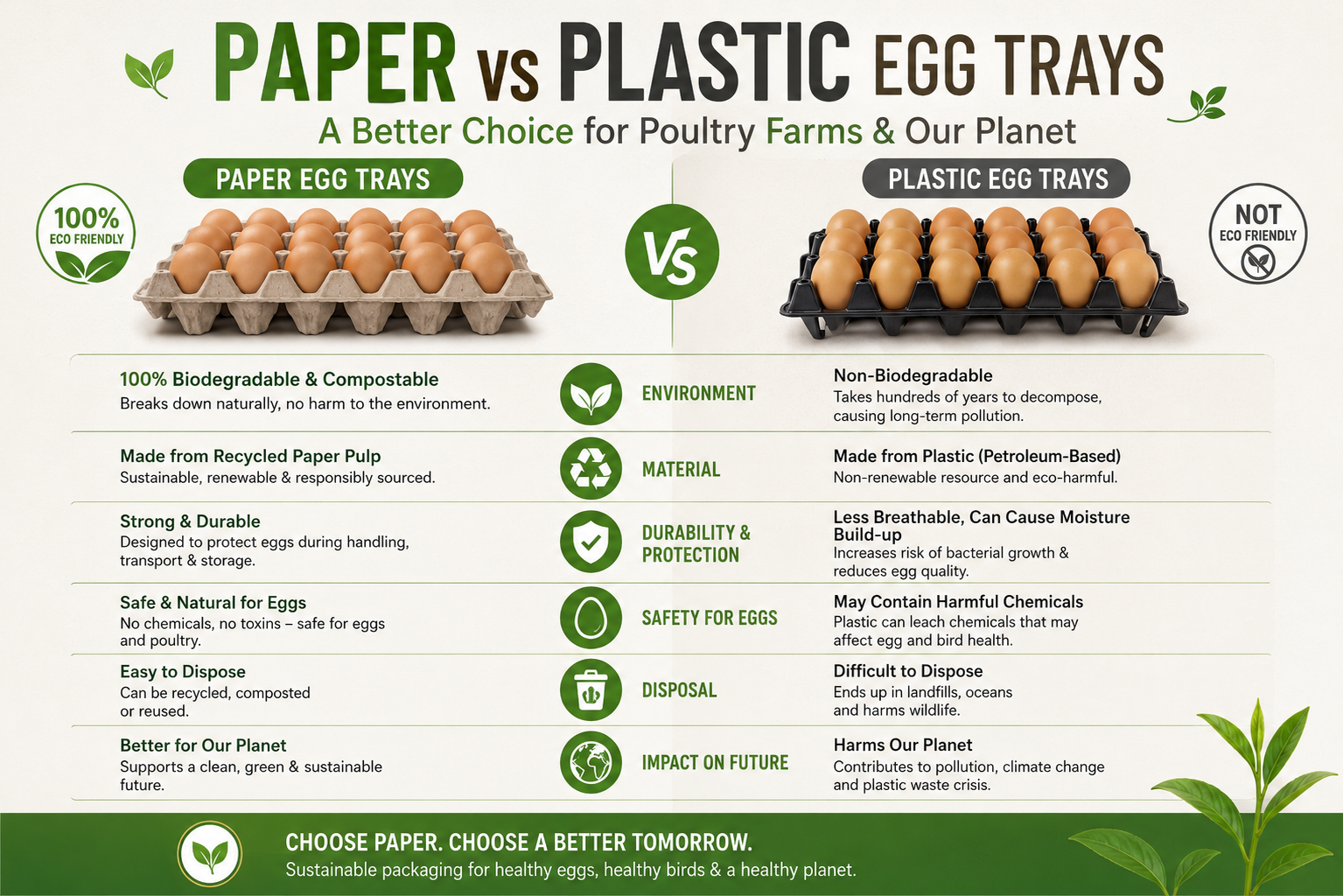
Paper Egg Tray vs Plastic Egg Tray: Full Comparison
| Feature Paper Egg Tray Plastic Egg Tray | ||
| Raw Material | Recycled waste paper | Petroleum-based polymers (PVC, PET, PP) |
| Biodegradability | Decomposes in weeks | Takes 400–500 years |
| Environmental Impact | Minimal — circular resource use | High carbon footprint and pollution risk |
| Shock Absorption | Excellent — natural pulp cushioning | Moderate |
| Breathability | Yes — promotes air circulation | No — airtight surface |
| Cost per Tray (Bulk) | Lower | Higher |
| Regulatory Compliance India 2026 | Fully compliant — no plastic laws apply | Subject to EPR, recycled content mandates |
| Reusability | Single-use; compostable after use | Multi-use in closed-loop environments |
| Export Market Acceptance | Widely preferred internationally | Increasingly restricted globally |
| Carbon Footprint | Low | High |
When Is Plastic Egg Tray Still Used in India?
Despite the overwhelming advantages of paper egg trays, plastic trays retain a limited role in specific use cases within India's poultry sector. Hatcheries that incubate fertile eggs and require repeated sterilization of trays between uses may prefer plastic for its washability. Cold storage facilities operating in highly controlled temperature and humidity environments may also use plastic trays where paper's breathability is a structural liability rather than an asset.
Outside these specific applications, the case for plastic egg trays in the Indian market is diminishing rapidly as regulations tighten, consumer preferences shift, and paper tray quality improves with better manufacturing infrastructure and premium raw material sourcing.
Why Sri Vijaya Durga Paper Egg Trays Are the Right Choice
Sri Vijaya Durga Paper Board Industry is a women-led manufacturing enterprise based in Palwancha, Telangana, producing export-grade paper egg trays using premium pulp from ITC Bhadrachalam — one of India's most reputed pulp suppliers. Our manufacturing process delivers trays with consistent cavity depth, uniform wall thickness, and industry-leading structural strength across every batch.
We supply bulk paper egg trays to poultry farms, egg wholesalers, and export distributors across India, with our current production capacity scaling from 200 to 400 tonnes per month to meet growing domestic and international demand. Every tray we manufacture is 100% biodegradable, fully compliant with India's 2026 packaging regulations, and engineered for the rigors of India's egg supply chain — from farm gate to final destination.
Choosing the Right Egg Tray: A Quick Decision Guide
| Your Situation Recommended Tray Type | |
| Poultry farm supplying domestic market in bulk | Paper egg tray (30-egg, molded pulp) |
| Egg distributor supplying retail and mandis | Paper egg tray — cost-effective, compliant |
| Exporter supplying Gulf or European markets | Export-grade paper egg tray |
| Hatchery requiring washable, reusable tray | Plastic tray (closed-loop hatchery only) |
| Farm targeting organized retail or supermarkets | Paper egg carton (6/12-egg retail format) |
| Large operation needing custom bulk packaging | Customized molded pulp tray |
Frequently Asked Questions (FAQs)
Q1. What is the main difference between paper and plastic egg trays?
The most fundamental difference is the material and its environmental impact. Paper egg trays are made from recycled waste paper and are 100% biodegradable, decomposing within weeks. Plastic egg trays are made from petroleum-based polymers, take 400–500 years to decompose, and are subject to India's increasingly strict plastic waste regulations.
Q2. Which egg tray is better for a poultry farm in India — paper or plastic?
For the vast majority of Indian poultry farms, paper egg trays are the better choice. They are more cost-effective in bulk, fully compliant with India's 2026 packaging rules, better accepted in export markets, and provide excellent egg protection through natural pulp cushioning. Plastic trays are only preferable in specific closed-loop hatchery environments.
Q3. Are paper egg trays as strong as plastic egg trays?
Yes, high-quality paper egg trays made from premium pulp fiber are structurally strong enough for all standard poultry farm, wholesale, and export supply chain applications. Trays manufactured using ITC Bhadrachalam pulp — like those produced by Sri Vijaya Durga — deliver consistent strength, uniform cavity depth, and reliable egg protection through long-distance road and rail transport.
Q4. Are plastic egg trays banned in India in 2026?
Plastic egg trays are not outright banned, but they are heavily regulated. Under the Plastic Waste Management (Amendment) Rules, 2025 and 2026 amendments, businesses using plastic packaging must comply with EPR registration, mandatory recycled content requirements (30% for rigid plastic in 2025–26, rising to 60% by 2028–29), and QR/barcode traceability — with penalties up to ₹15 lakh for non-compliance. Paper trays eliminate all of this regulatory burden entirely.
Q5. Can paper egg trays be used for long-distance egg transportation in India?
Absolutely. Premium paper egg trays are engineered specifically for the demands of India's egg supply chain — including long-distance road transport across rough terrain. The molded pulp structure absorbs shock and vibration, reducing egg breakage. Sri Vijaya Durga supplies bulk trays to farms transporting eggs to markets in Mumbai, Kolkata, Dubai, and beyond.
Q6. Which is more cost-effective — paper or plastic egg trays — for bulk orders?
Paper egg trays are more cost-effective for bulk purchases. The raw material (recycled waste paper) is widely available and inexpensive across India, manufacturing costs are lower, and there are zero regulatory compliance overheads. Plastic trays carry higher base material costs plus the hidden costs of EPR compliance, recycled content mandates, and regulatory risk.
Q7. Where can I buy bulk paper egg trays in Telangana and Andhra Pradesh?
Sri Vijaya Durga Paper Board Industry, located in Palwancha, Telangana, supplies export-grade paper egg trays in bulk to poultry farms and distributors across Telangana, Andhra Pradesh, and pan-India. Contact us at +91 98663 44666 or email srivijayadurgapaper@gmail.com to discuss your bulk requirements and pricing.
Still using plastic egg trays? Make the switch to biodegradable, regulation-compliant paper egg trays today. Contact Sri Vijaya Durga Paper Board Industry — Telangana's trusted manufacturer of premium paper egg trays, supplying farms, distributors, and exporters across India and international markets.